
Neurobiologist and transhumanist Olga Levitskaya, 24, pictured in Moscow, is among those who believe that, through science, humans will reverse death. Photograph: Giuseppe Nucci
The photographer Giuseppe Nucci meets the cosmists and pioneers of transhumanism who make up the first cryopreservation society in Eurasia. Its storage conserves more than 80 bodies from around the world with the aim of bringing them back to life in the future
by Giuseppe Nucci
In Moscow at the end of the 19th century a librarian of poor origins started reflecting on how future human beings, raising themselves from a condition of conflict and divisiveness, would eventually be able to defeat evil and death through a technological and cultural revolution. His name was Nikolai Fedorovich Fedorov. In the long run, the philosopher’s beliefs permeated Russian culture, inspiring scientists, mystics and artists who shared a peculiar, spiritual-philosophic doctrine later known as cosmism.
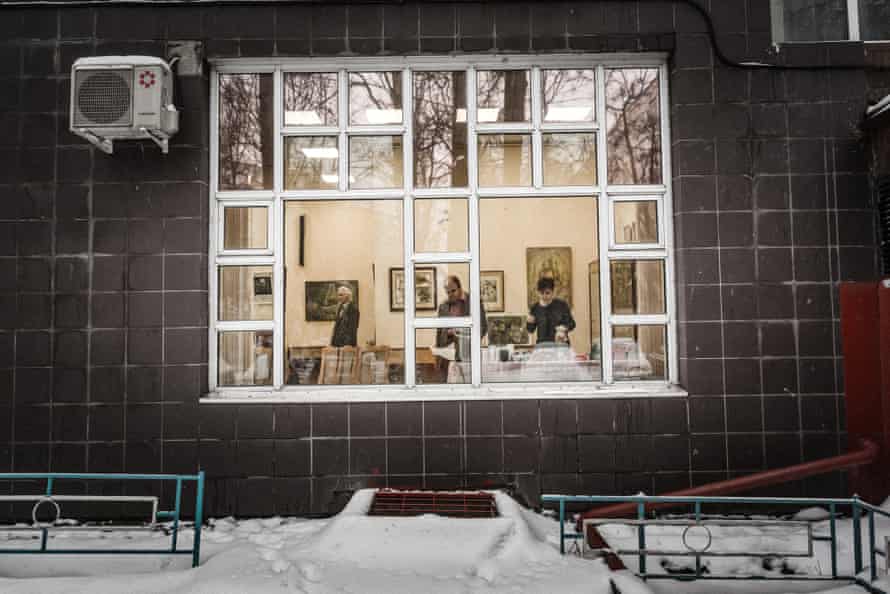
In the museum library named after Fedorov, cosmists prepare to mark the anniversary of the death, in 2014, of Svetlana Semenova, a leading researcher into Fedorov’s works, whose DNA has been preserved. The library, seen as the heart of the Russian cosmist movement, is engaged in promoting and developing Fedorov’s ideas and thought.
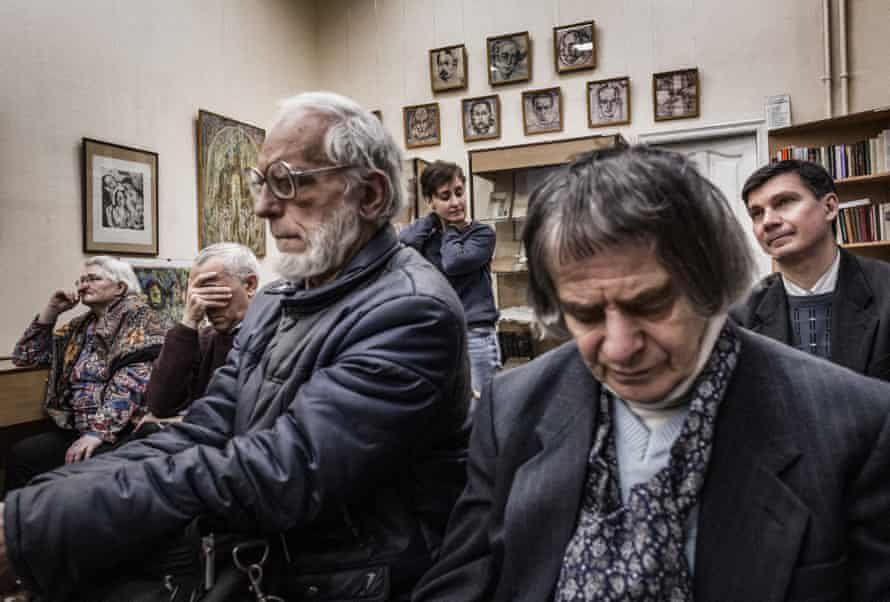

Left, cosmists during the annual meeting on the anniversary of Semenova’s death. Right, Misha Ivanov and Elena Milova, two delegates at a conference on anti-ageing.


Semenova’s daughter, Anastasia Gracheva, a Russian cosmist activist, studies objects in the museum. Her mother’s body is preserved by the cryopreservation society KrioRus with the aim of bringing her back to life some time in the future.
Fedorov’s ideas have been spread by Russian cosmists, whose thoughts have merged into a wider international philosophic movement known as transhumanism.
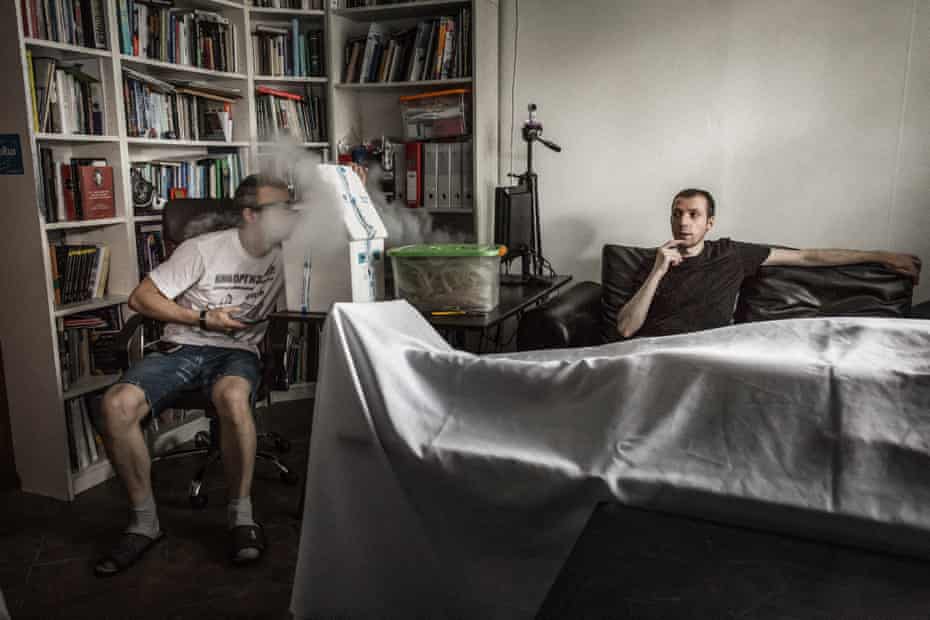
Two transhumanist activists, Alexey Samykin and Igor Trapeznikov, pictured at the KrioRus headquarters during the making of a documentary by the German channel Galileo.
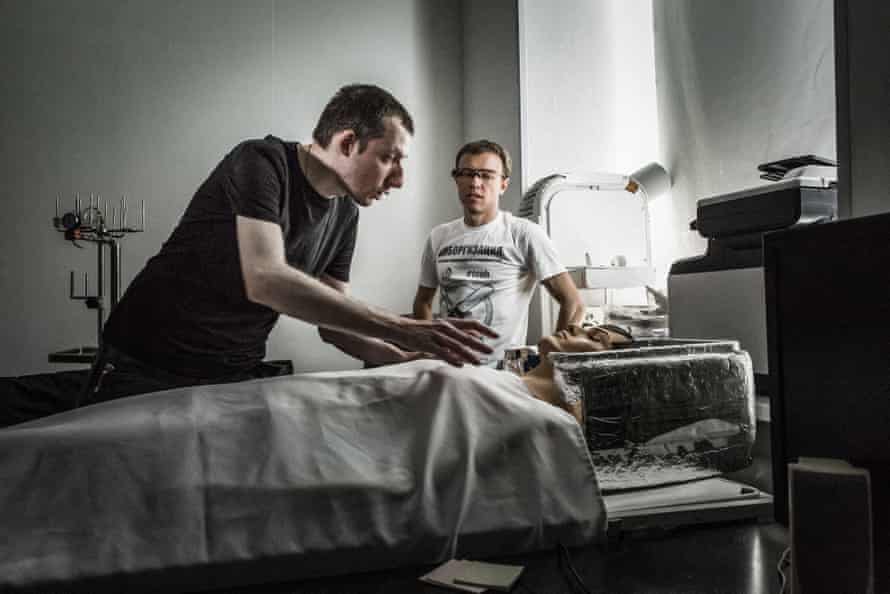
Transhumanism is a cultural movement that encourages scientific and technological discoveries to enhance human physical and cognitive capacities. It believes that a future most people dismiss as science fiction is just around the corner. Transhumanists say that by 2045, humanity will experience “singularity”, a theory predicting human and artificial intelligence can be fused.
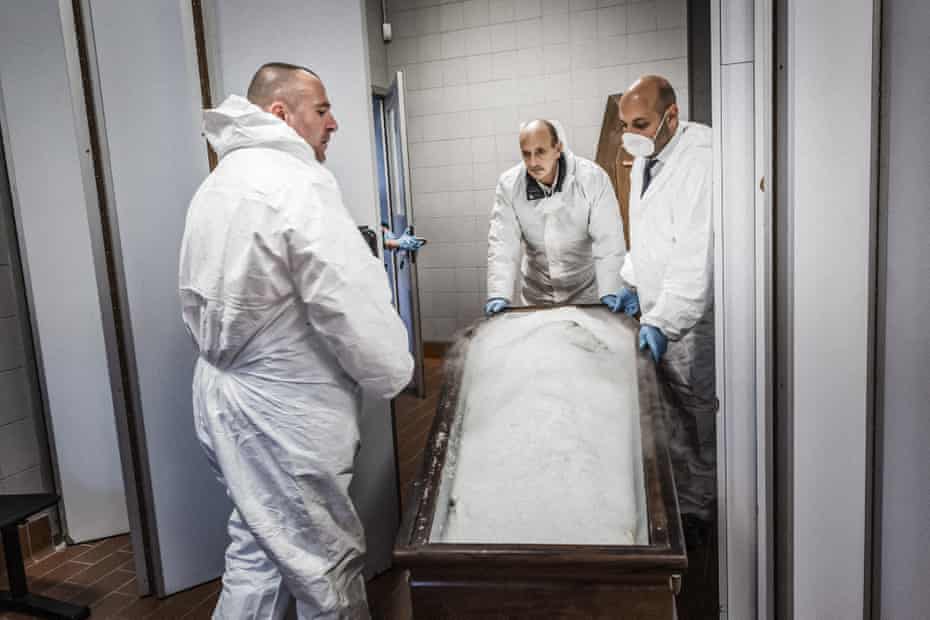
Filippo Polistena, founder of the KrioRus subsidiary Polistena Human Cryopreservation company, and colleagues, prepare the body of a client in Bologna, Italy, to be sent to Russia. KrioRus is making numerous deals outside Russia to promote ‘hybernation’.
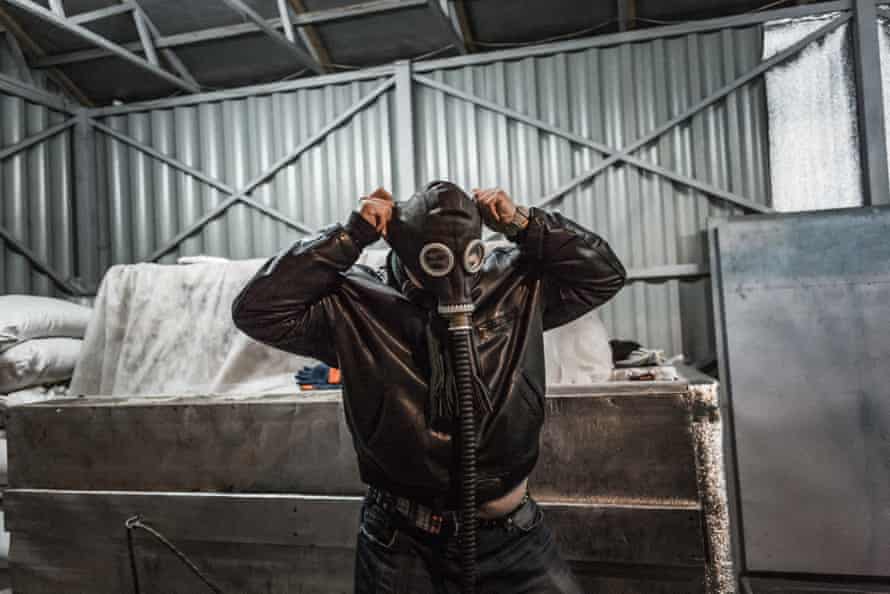
A KrioRus technician prepares to enter a cooling chamber, where bodies are covered with dry ice in order to drop their temperature to an initial -78C. The mask is necessary to guard against asphyxiation by the carbon dioxide vapours in the chamber.
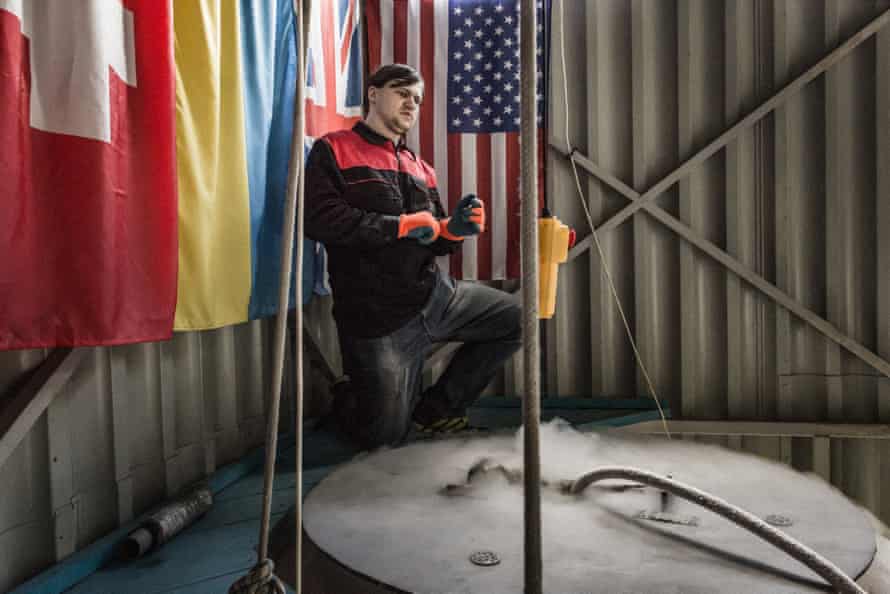
Ivan Stepin, deputy director of KrioRus and member of the transhumanist moment, waiting for twice-a-week storage maintenance to be completed.
Russian transhumanists established KrioRus, the first cryopreservation society in Eurasia, in 2003. Today it conserves 81 human bodies, from Russia, the US, the Netherlands, Japan, Israel, Italy, Switzerland and Australia, as well as animals. It is based in Sergiev Posad, a residential neighbourhood more than two hours north of Moscow.
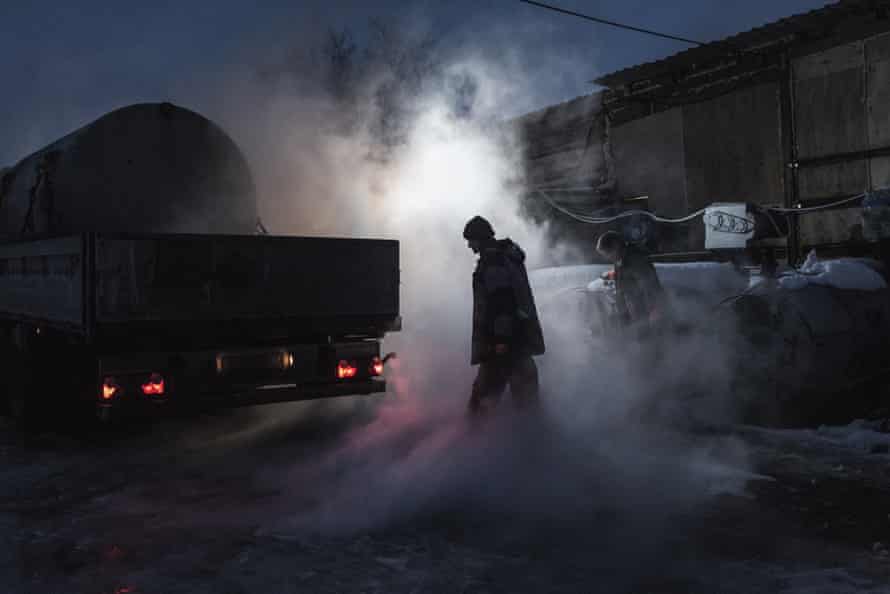
Outside the liquid nitrogen and dry ice factory Pole of Cold, on the periphery of Moscow.
Signing a contract to be cryopreserved is an act of faith in scientific research, whose progress in the fields of life extension and medicine make some people believe that humanity is inexorably heading towards immortality. While awaiting technological their hoped for resurrection, the bodies of KrioRus’s clients float in storage units at a temperature of -196C.
With death many people’s greatest fear, cosmists and transhumanists can offer a seductive myth of immortality.